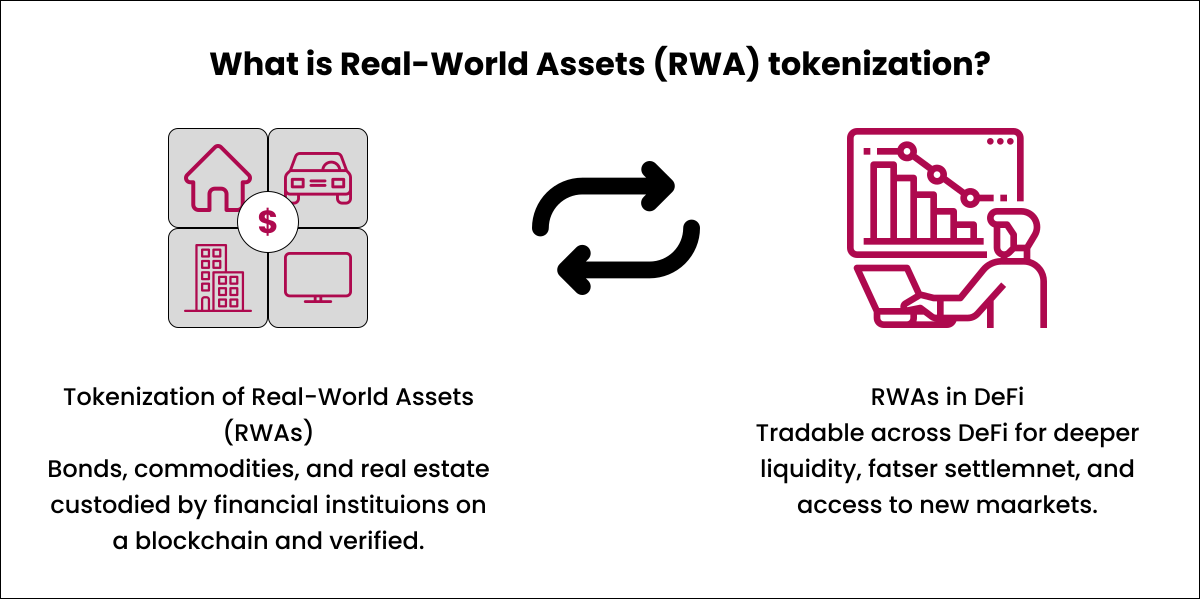
Is Tokenization the Future of Digital Possessions?
By [Your Name]
[City, Date]– The quick development of blockchain technology has triggered a transformative idea: tokenization. This process, which transforms real-world assets right into digital tokens on a blockchain, is poised to transform sectors ranging from finance to realty. Is tokenization truly the future, or is it simply one more technical hype cycle? Specialists consider in on the potential and difficulties of this arising fad.
What Is Tokenization?
Tokenization entails representing ownership of an asset– whether substantial, like property, or intangible, like copyright– as an electronic token on a blockchain. These tokens can be traded, offered, or fractionalized, enabling extraordinary liquidity and ease of access. As an example, a $10 million industrial residential or commercial property can be divided into 10,000 tokens, each representing a $1,000 share, allowing smaller sized investors to take part in markets previously scheduled for the rich.
The Assurance of Tokenization
Proponents say that tokenization democratizes financial investment chances. “Tokenization breaks down obstacles,” says Dr. Emily Carter, a blockchain researcher at Stanford College. “It allows international accessibility to possessions that were when illiquid or needed significant funding to enter.”
In money, tokenized safeties are acquiring grip. If you cherished this report and you would like to acquire more data about Bitcoin-Miner.Org kindly visit our web site. Business can issue stocks or bonds as tokens, lowering intermediaries and streamlining procedures. Real estate tokenization, at the same time, can open trillions in dormant assets by enabling fractional possession and faster purchases. Art and antiques are likewise being tokenized, allowing enthusiasts to own an item of a Picasso or a rare sporting activities memorabilia without acquiring the whole thing.
Regulative Obstacles
Regardless of its possibility, tokenization deals with substantial regulative difficulties. Federal governments globally are grappling with exactly how to identify and supervise tokenized possessions. “The lack of clear guidelines creates uncertainty,” keeps in mind Mark Thompson, a fintech legal representative based in New York. “Without a legal framework, widespread adoption will stay stalled.”
Safety is another problem. While blockchain is inherently protected, the systems organizing tokenized assets are vulnerable to hacks. In 2022, a major tokenization system endured a $50 million breach, highlighting the risks.
Case Researches: Success and Failing
Some jobs have actually already shown tokenization’s capacity. In 2021, a luxury hotel in Aspen was tokenized, increasing $18 million in mins. A tokenized fund by Swiss company Mt. Pelerin drew in millions from retail financiers.
Nonetheless, not all ventures have succeeded. A top-level tokenized genuine estate task in Dubai stopped working to draw in buyers as a result of legal obscurities and lack of investor self-confidence. “The technology is ready, yet the environment isn’t,” admits Ahmed Al-Mansoori, a Dubai-based property developer.
The Road Ahead
For tokenization to come to be mainstream, several turning points should be achieved. Regulatory quality is paramount, as is the development of robust framework to take care of massive tokenized markets. Education and learning is additionally important– lots of possible financiers stay skeptical of digital assets due to misconceptions or lack of understanding.
“Tokenization isn’t a concern of ‘if’ but ‘when,'” anticipates Sarah Lin, chief executive officer of a blockchain startup. “Once the pieces fall right into area, it will redefine exactly how we think of ownership and investment.”
Conclusion
Tokenization holds tremendous promise, providing liquidity, accessibility, and efficiency throughout sectors. Yet, its future hinges on getting over regulatory, safety and security, and adoption difficulties. As the world inches toward a digital-first economy, tokenization could quite possibly come to be the cornerstone of tomorrow’s economic systems– if it can browse the hurdles in advance.
For even more understandings on blockchain and digital properties, adhere to [Your Name] on [Social Media Deal With]
— The quick evolution of blockchain modern technology has given rise to a transformative principle: tokenization. Tokenization involves representing possession of a possession– whether concrete, like real estate, or abstract, like intellectual building– as an electronic token on a blockchain. “Tokenization breaks down obstacles,” says Dr. Emily Carter, a blockchain researcher at Stanford University. Genuine estate tokenization, at the same time, might unlock trillions in dormant assets by making it possible for fractional ownership and faster purchases.”Tokenization isn’t a concern of ‘if’ however ‘when,'” predicts Sarah Lin, Chief executive officer of a blockchain start-up.