
3DB database files are primarily known as 3DMark Database files used by the 3DMark benchmarking tool from Futuremark Corporation. These files hold the structured data that 3DMark relies on to organize performance runs, typically including system information, configuration settings, and the scores generated by different benchmarks. As a closed, application-specific database type, the 3DB format is meant to be managed exclusively by 3DMark rather than opened and modified directly by end users. On Windows systems, the .3DB extension is typically associated with 3DMark, so double-clicking one of these files will usually launch the benchmark software and let it handle the database content. Should you come across a 3DB database file on its own, the best practice is to back it up, leave its contents unchanged, and rely on appropriate software such as 3DMark to work with it. When 3DMark is unavailable or fails to open the file, a universal viewer such as FileViewPro may still be able to recognize the 3DB format, report its properties, and guide you toward a suitable solution.
Most modern programs you interact with every day, including social networks, online banking platforms, email clients, and business management tools, depend on database files running quietly in the background. At the simplest level, a database file is a structured container that stores collections of related data so software can save, search, update, and organize information efficiently. Rather than simply listing data line by line like a text file, a database file relies on schemas, indexes, and internal rules that let software handle large amounts of information accurately and at high speed.
The origins of database files stretch back to the mainframe computers of the 1950s and 1960s, when companies first started converting paper files into digital records on tape and disk. Early database systems often used hierarchical or network models, arranging data like trees of parent and child records connected by pointers. Although this approach worked well for very specific tasks, it was rigid and hard to change when business requirements evolved. In the 1970s, Edgar F. Codd of IBM introduced the relational model, a new way of organizing data into tables with rows and columns tied together by formal rules. From that concept grew relational database management systems like IBM DB2, Oracle, Microsoft SQL Server, MySQL, and PostgreSQL, all of which use proprietary database file formats to store structured data that can be queried with SQL.
As databases evolved, the structure of their files also became more sophisticated. Many early relational engines stored user data, indexes, and system information together inside a few big proprietary files. Later generations started dividing data structures into multiple files, isolating user tables, indexes, transaction logs, and temporary storage so they could be tuned more precisely. At the same time, more portable, single-file databases were developed for desktop applications and embedded devices, including formats used by Microsoft Access, SQLite, and many custom systems created by individual developers. Behind the scenes, these files hold the records that drive financial software, music and video catalogues, address books, retail systems, and an enormous variety of other applications.
When database architects define a file format, they have to balance a number of competing requirements and constraints. One of the most important goals is to keep data consistent even if the program crashes or the power fails, which is why many databases use transaction logs and recovery mechanisms stored in separate files. Another challenge is supporting concurrent access, allowing many users or processes to read and write at the same time without corrupting records. Within the database files, indexes function as smart roadmaps that point queries toward specific records, dramatically reducing the need for full-table scans. Some database file formats are tuned for analytics and reporting, using column-oriented layouts, compression, and aggressive caching to speed up large read-heavy workloads, while others prioritize fast inserts, updates, and strict transactional guarantees for intensive day-to-day operations.
Database files are used in advanced scenarios that go far beyond simple record keeping for a single application. When used in data warehousing and BI, database files consolidate historical data from many systems, giving analysts the foundation they need to explore trends and plan for the future. In geographic information systems, specialized database formats store maps, coordinates, and attributes for locations around the globe. In case you loved this post and you would love to receive much more information relating to 3DB file opener assure visit the website. In research environments, database files record experimental and simulated data, letting experts revisit, filter, and analyze results in many different ways. Modern NoSQL platforms, including document, key-value, and graph databases, ultimately persist information to database files as well, even if the layout is far removed from classic row-and-column tables.
The history of database files also mirrors the broader movement from local storage toward distributed and cloud-based systems. Previously, the entire database usually resided on one box, but today cloud-oriented designs partition and replicate data across clusters of nodes to boost resilience and scalability. Even so, each node still writes to local files at the storage layer, sometimes using log-structured designs that append changes sequentially and then compact data later. Newer file formats also take advantage of SSDs and high-speed networked storage, focusing on patterns that reduce latency and make better use of modern hardware. Nevertheless, the fundamental concept does not change; the database file is still the long-term home of the data, regardless of how abstract or “virtual” the database may seem from the outside.
With different vendors, workloads, and platforms, it is not surprising that there are countless database file extensions and unique storage formats in use. Some formats are open and well documented, allowing third-party tools and libraries to access them directly, while others are tightly bound to a single application and not meant to be edited outside that environment. From the user’s perspective, this diversity can be frustrating, particularly when mysterious database files appear on a hard drive or are sent by someone else. In some cases, the file belongs to an installed program and should never be modified by hand; in other cases, it acts as a standalone portable database or a simple local cache.
In the future, database file formats will probably grow more specialized and efficient, adapting to new hardware and evolving software patterns. Newer designs focus on stronger compression, faster query performance, better use of memory, and more robust integrity guarantees in distributed systems. At the same time, organizations frequently move data between systems, upgrade software, and mix on-premises databases with cloud services, making interoperability and migration increasingly important. Under these conditions, tools capable of identifying and inspecting database files play a key role, particularly when the original software is missing or poorly documented.
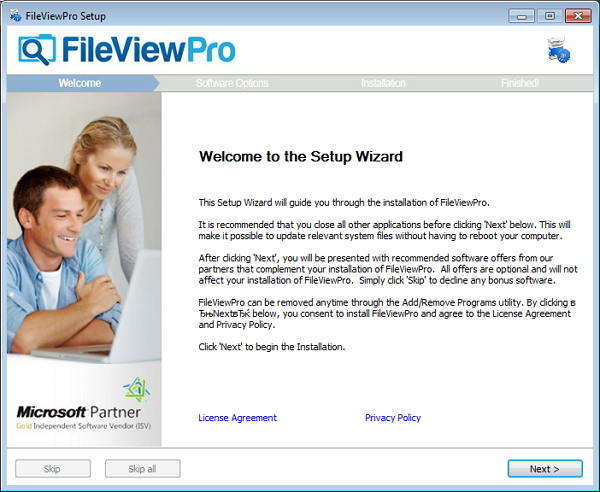
For everyday users, the most important thing to understand is that database files are not random blobs of binary data but carefully structured containers designed to balance performance, reliability, and flexibility. That is why users should treat these files with care, keep regular backups, and use dedicated tools instead of generic editors whenever they need to look inside a database file. Tools such as FileViewPro aim to recognize a wide range of database file extensions, give you a way to view or inspect them where it is safe to do so, and show how they fit into your overall workflow. Whether you are a casual user trying to open a single unknown file or a professional working through a collection of legacy databases, recognizing the purpose and structure of database files is a crucial step toward managing your data safely and effectively.